The Purge
The Purge was the pivotal event in which Napoleon, having already expelled Snowball and abolished the Sunday Meetings, used his trained dogs to force confessions from animals accused of treason, then executed them on the spot. It shattered the last vestiges of the animals' belief in a just and equal society, replacing hope with terror and establishing a regime where dissent was met with death. The Purge was not a single moment but a process that began with the expulsion of Snowball and culminated in a public spectacle of slaughter, after which the revolutionary anthem 'Beasts of England' was abolished, signaling that the Rebellion was declared complete and no further change was possible.
Background and Causes
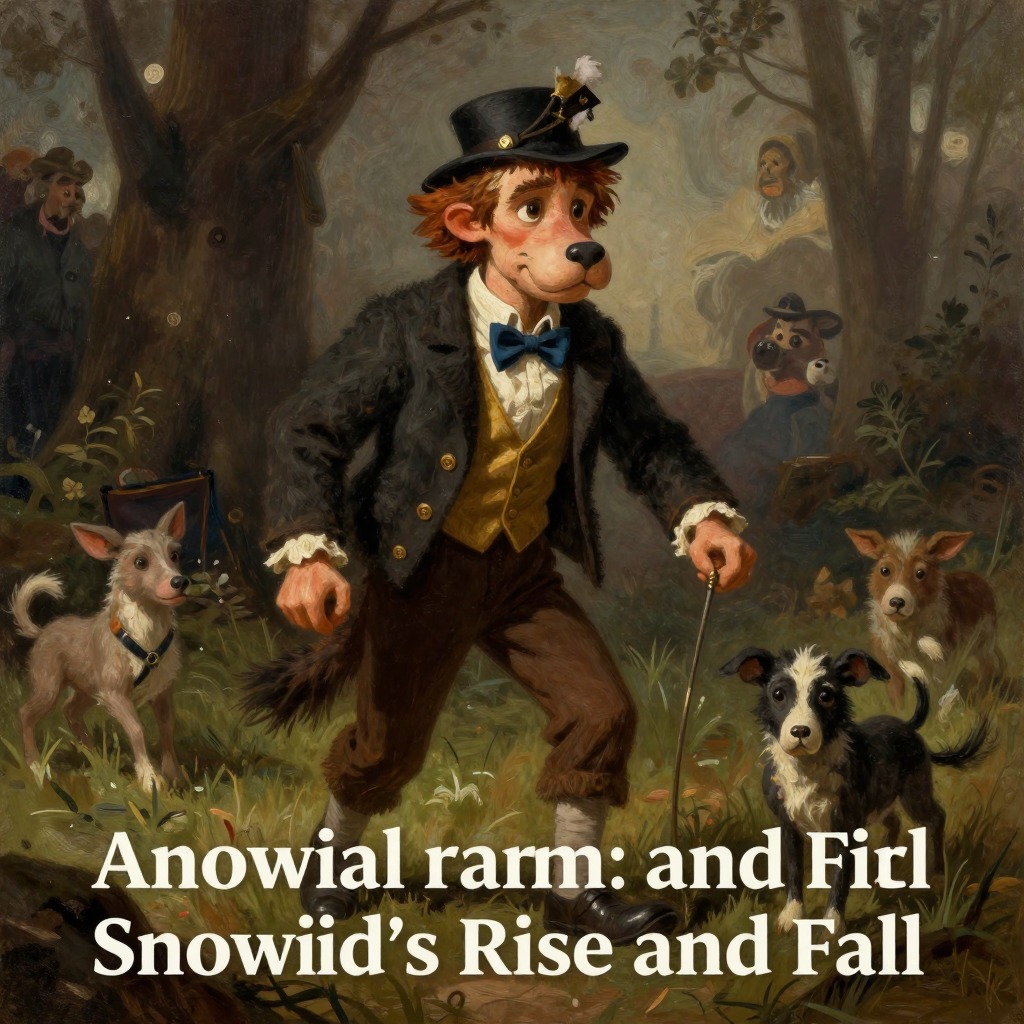
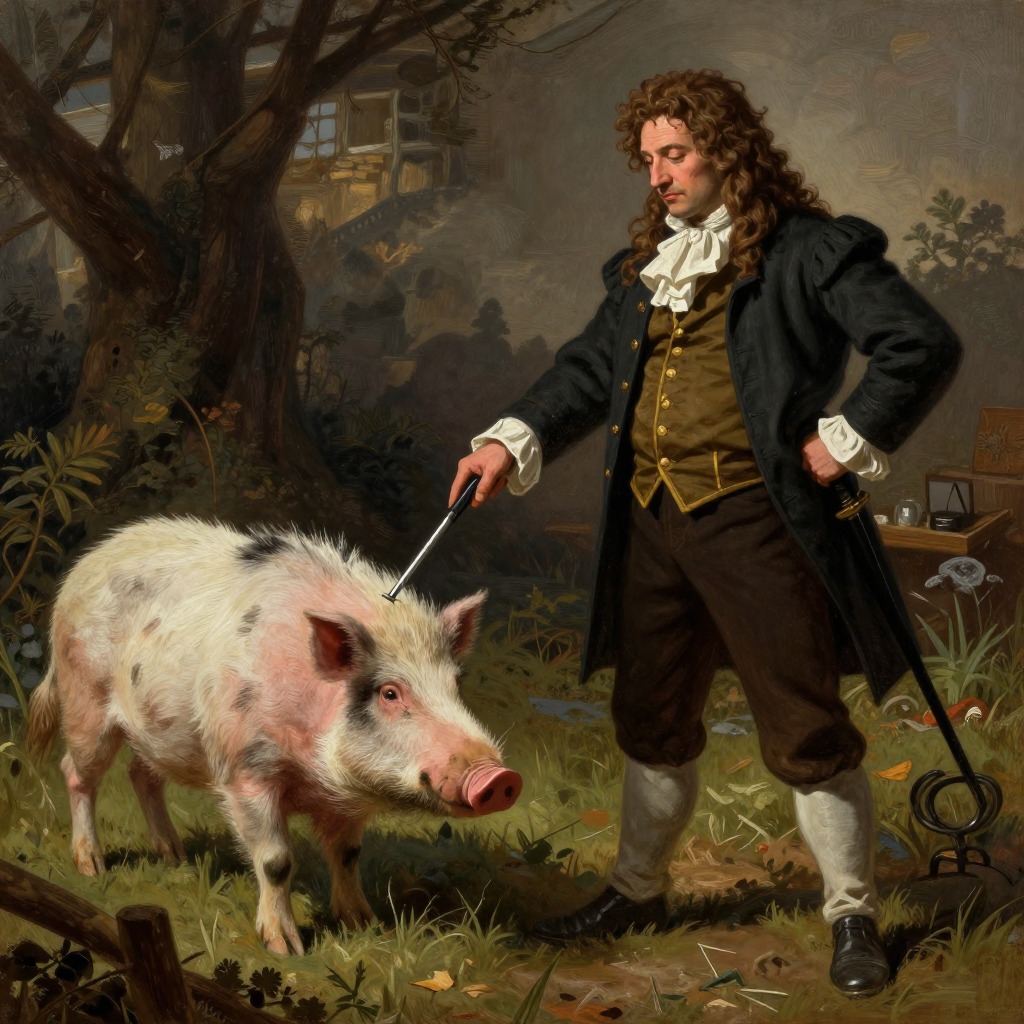
The Purge did not emerge from nowhere. It was the logical outcome of a series of power consolidations by Napoleon. After Snowball's expulsion, Napoleon had already abolished the Sunday Meetings, replacing democratic debate with orders issued by a committee of pigs presided over by himself. The dogs, originally the puppies taken from their mothers and reared privately by Napoleon, had become his personal guard, growling at any sign of dissent. The ideological groundwork was laid by Squealer, who systematically rewrote history: Snowball, once a hero of the Battle of the Cowshed, was recast as a traitor and a secret agent of Jones from the very beginning. The destruction of the windmill, which was actually caused by a storm, was blamed on Snowball, and Napoleon pronounced a death sentence upon him. The animals were already living in a climate of fear, with Napoleon rarely appearing in public without an escort of six dogs, and the constant threat of Snowball's supposed nocturnal visits used to explain every mishap.
The Event: Confessions and Executions
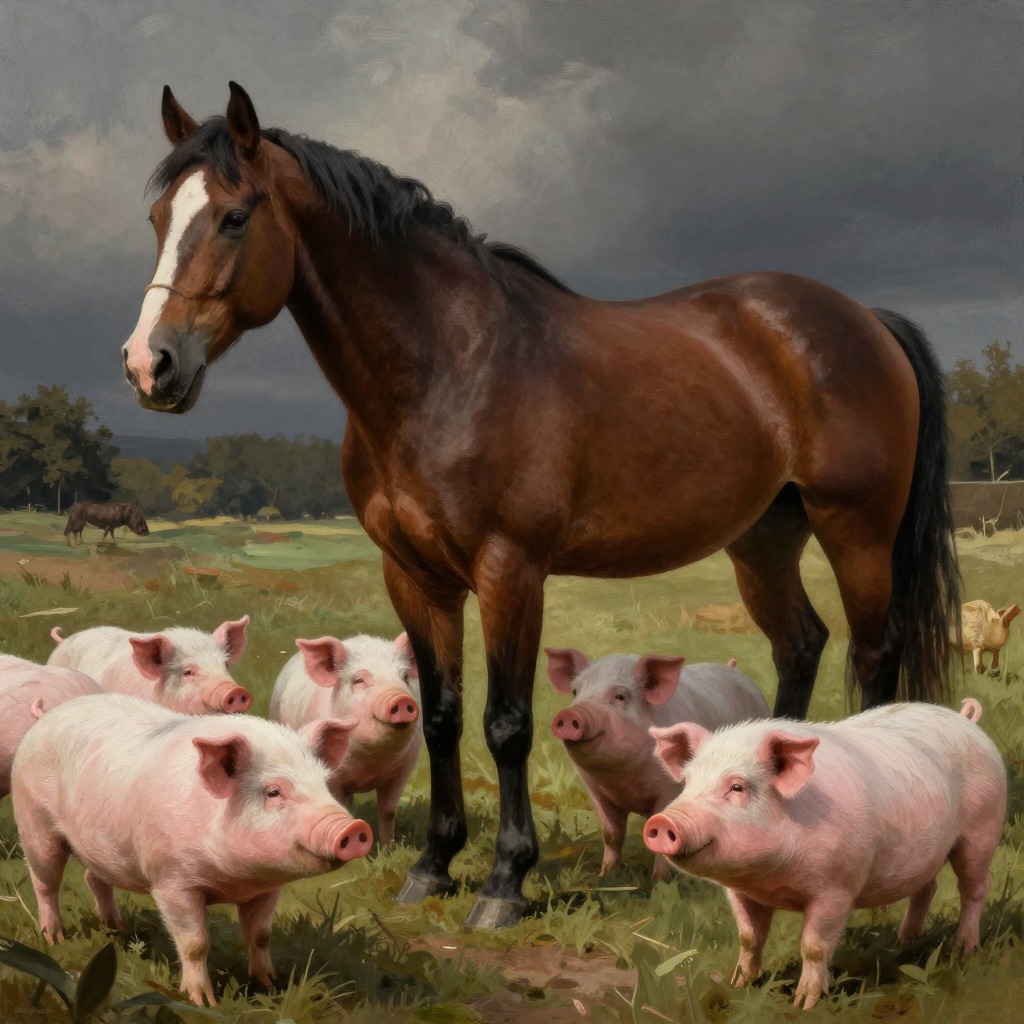
The Purge itself took place in the late afternoon, four days after Squealer had warned that Snowball's secret agents were lurking among them. Napoleon emerged from the farmhouse wearing both his medals—'Animal Hero, First Class' and 'Animal Hero, Second Class', which he had recently awarded himself—with his nine huge dogs frisking around him. The animals cowered in silence, knowing something terrible was about to happen. Napoleon uttered a high-pitched whimper, and the dogs immediately seized four pigs by the ear and dragged them to his feet. These were the same four pigs who had protested when Napoleon abolished the Sunday Meetings. Without any prompting, they confessed to having been secretly in touch with Snowball, to collaborating with him in destroying the windmill, and to plotting to hand over Animal Farm to Mr. Frederick. They added that Snowball had admitted to being Jones's secret agent for years. The dogs promptly tore their throats out. Then the three hens who had led the rebellion over the eggs came forward, confessing that Snowball had appeared to them in a dream and incited them to disobey. They were slaughtered. A goose confessed to having secreted six ears of corn and eaten them in the night. A sheep confessed to urinating in the drinking pool, urged by Snowball, and two other sheep confessed to murdering an old ram by chasing him around a bonfire. All were slain on the spot. The confessions and executions continued until a pile of corpses lay before Napoleon's feet, and the air was heavy with the smell of blood, which had been unknown on the farm since the expulsion of Jones.
Consequences and Aftermath
The immediate consequence was the complete destruction of any remaining trust or solidarity among the animals. They crept away in a body, shaken and miserable, not knowing which was more shocking—the treachery of the animals who had leagued with Snowball, or the cruel retribution they had witnessed. For the first time since Jones left, no animal had killed another animal; now they had seen their comrades torn to pieces. Clover, looking down the hillside, felt that this was not what they had aimed for when they set out to overthrow the human race. She had imagined a society of animals set free from hunger and the whip, all equal, each working according to his capacity, the strong protecting the weak. Instead, no one dared speak his mind, fierce dogs roamed everywhere, and animals were torn to pieces after confessing to shocking crimes. Yet she knew they were still better off than in Jones's day, and that above all they must prevent the return of human beings. Boxer, unable to comprehend the horror, concluded that the fault must be in themselves and resolved to work harder, getting up a full hour earlier. The Purge also led directly to the abolition of 'Beasts of England'. Squealer announced that the song was no longer needed because the Rebellion was now completed; the execution of the traitors was the final act. The enemy, both external and internal, had been defeated. In its place, Minimus composed a new song praising Animal Farm and Napoleon, but it never stirred the animals' hearts as the old song had.
Thematic Significance
The Purge represents the final and most brutal stage of the revolution's corruption. It demonstrates how a regime that begins with ideals of equality and freedom can, through the concentration of power, the elimination of dissent, and the use of terror, transform into a tyranny indistinguishable from the one it overthrew. The forced confessions, the rewriting of history, and the use of scapegoats (Snowball) to justify violence are classic features of totalitarian rule. The Purge also reveals the psychological mechanism by which the oppressed come to accept their own oppression: the animals, terrified and confused, cannot bring themselves to rebel because they still fear the return of Jones more than they fear Napoleon's dogs. The Purge is the moment when the revolution eats its own children, and the dream of a just society is replaced by the reality of a police state.